Lighting: how many light fixtures are needed in a room?
Properly lighting a room does not just mean “putting a lamp in the centre of the ceiling”. The number of light fixtures needed depends on the size and function of the space, the furnishings and the desired visual comfort.
In this guide, we will look at how many light fixtures are really needed and how to design them effectively.
Why is the number of light sources so important
Well-designed lighting affects:
- Visual comfort
- Functionality of spaces
- Atmosphere
- Energy efficiency
- Enhancement of furnishings.
A single central light source often creates shadows, dark areas and poor flexibility. The trend is to design layered lighting, consisting of multiple levels.
The 3 levels of lighting to consider
1. General (ambient) lighting
This is the basis: it illuminates the room evenly.
It can be provided by: ceiling lights, chandeliers, ceiling spotlights, light tracks. It is always necessary to provide at least one main light source, which can be central or distributed using spotlights or tracks.
2. Task lighting
This is used for specific activities such as reading, working, cooking, and applying make-up.
Table lamps, wall lights, and adjustable spotlights are ideal.
3. Accent lighting
This enhances details and creates atmosphere: indirect LEDs, decorative lights, accent lighting.
How many light sources are needed room by room
Living room lighting
The living room is the most flexible space.
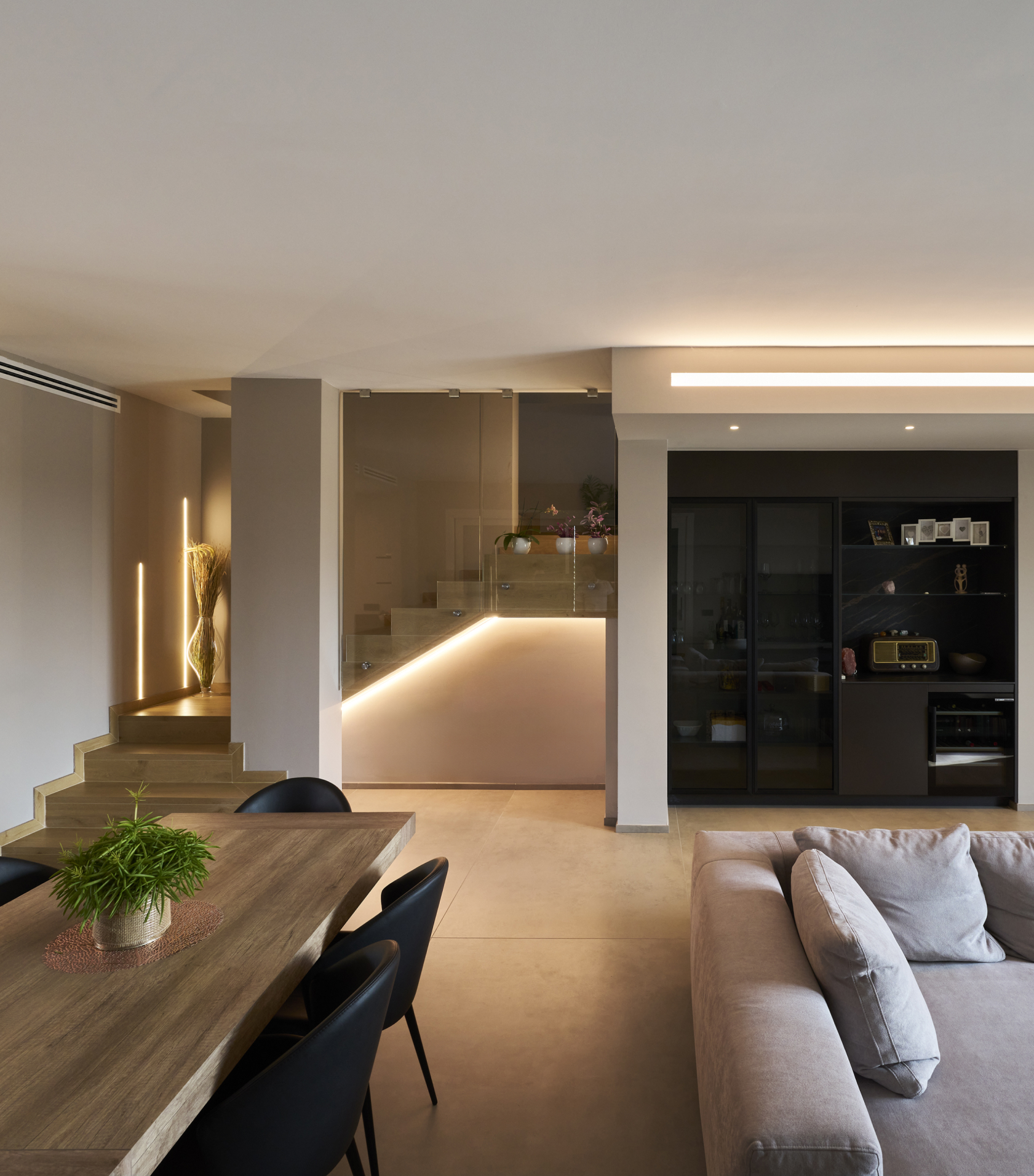
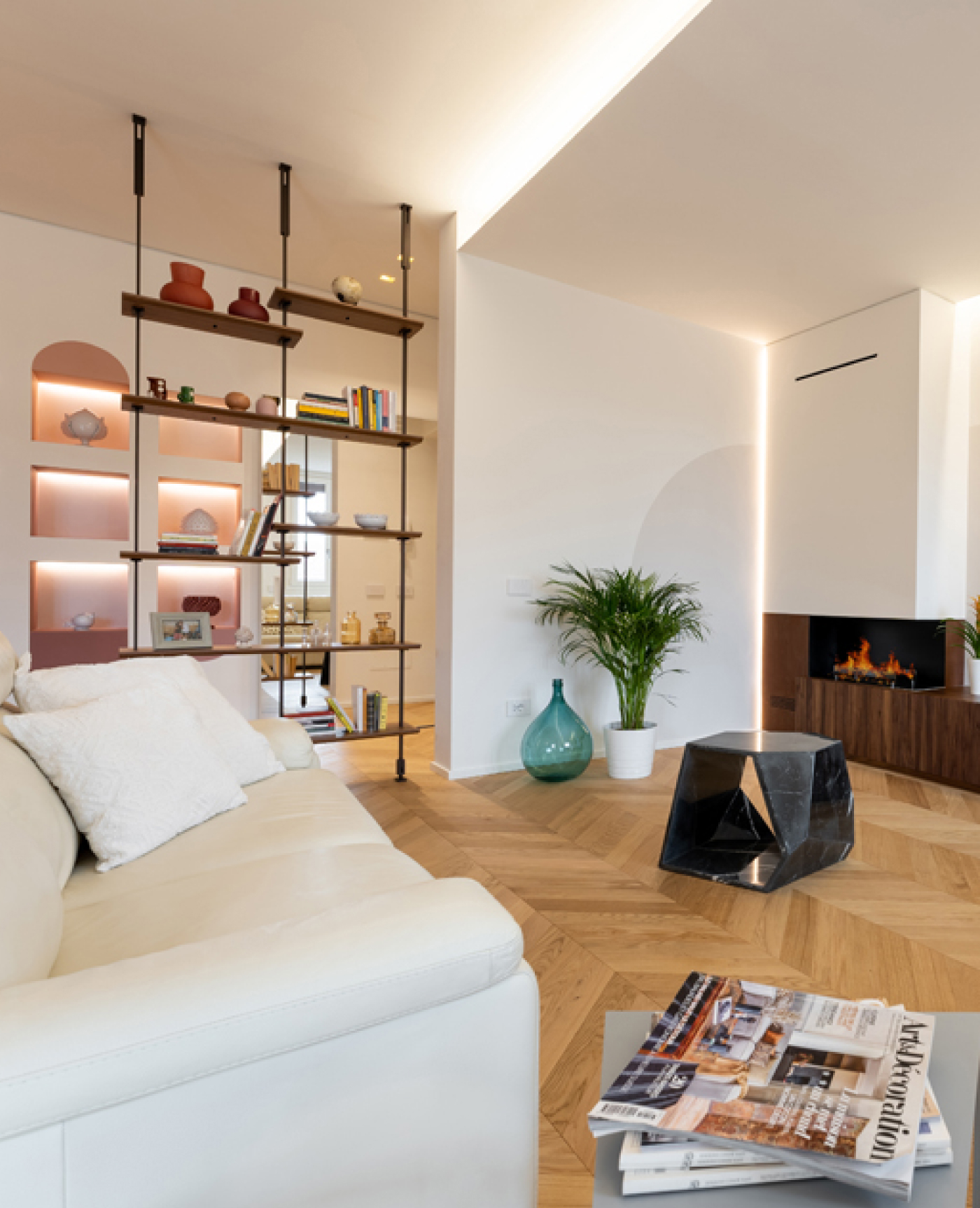
Recommended minimum for 15–20 m²: 4–6 light sources. 1 general light (ceiling light or spotlights), 2–3 functional lights (lamps or wall lights), 1–2 accent lights. In large rooms, over 30 m², you can have up to 8–10 light fixtures.
Kitchen Lighting
Here, functionality is key. The kitchen is one of the rooms that requires the most precise lighting.
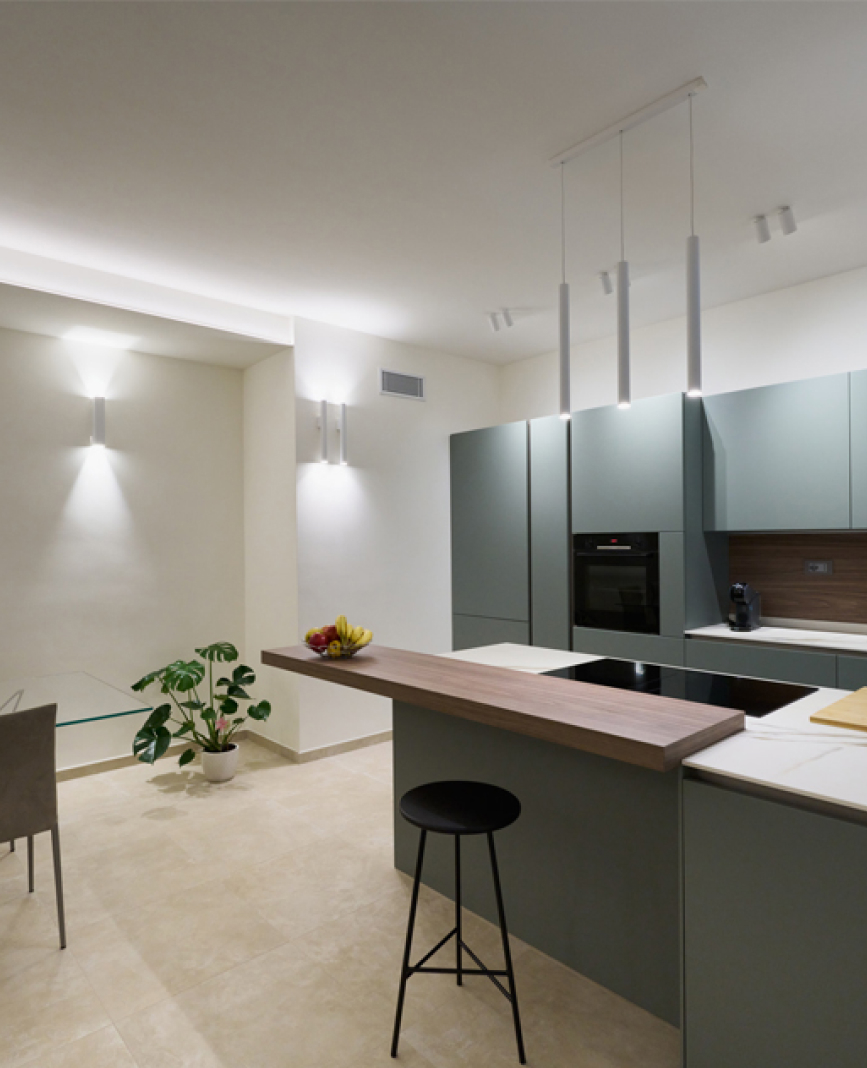
Recommended minimum for 12-20 m²: 5–7 light fixtures. 1 general light, 2 worktop spotlights, 1 table light, possibly LED under-cabinet lights.
Bedroom lighting
A balance between relaxation and functionality is needed.
Recommended minimum for 14-20 m²: 4-5 light fixtures. 1 central or diffused light, 2 bedside lights, 1 wardrobe or ambient light.
Bathroom lighting
Often underestimated, but here too, lighting is essential.
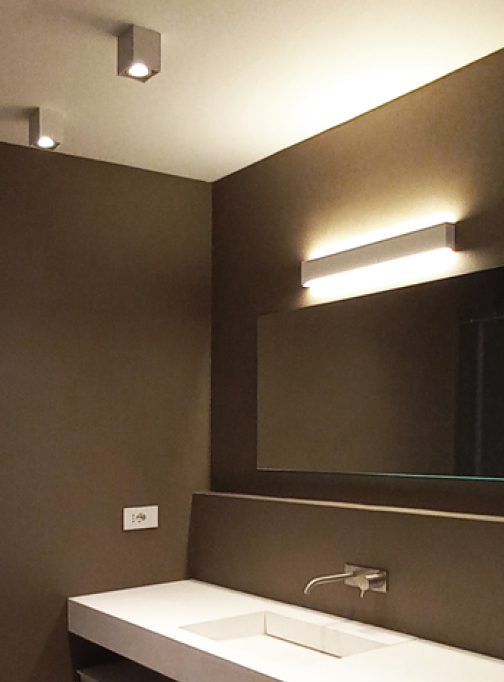
Recommended minimum for 6-10 m²: 3–4 light fixtures. 1 general light, 1-2 mirror lights, possible shower/bathtub light.
Study or office lighting
The lighting must be ergonomic.
Recommended minimum for 8-12 m²: 3–5 light points. 1 uniform general lighting (ceiling light or spotlights), 1 adjustable desk lamp, 1 indirect or ambient light to reduce contrasts, optional light on bookcase or work area.
Practical guide to lighting every space
What is a lighting design project?
Lighting designers do not just think in terms of the number of lamps, but consider various technical parameters:
- Amount of light required (lumens)
- Light distribution
- Colour temperature
- CRI (colour rendering index)
- Control and dimming
This is where Novalux's experience comes into play, designing lighting systems based on a technical analysis of the space rather than standard solutions.
Common mistakes to avoid
- A single central light source
- Lights that are too cold in domestic environments
- Lack of indirect light
- Non-dimmable lighting
- Poorly positioned spotlights
A lighting design error affects visual comfort, functionality, atmosphere and energy efficiency, even if the home is well furnished.
Novalux lighting design projects
A professional project allows you to:
- Avoid energy waste
- Improve visual comfort
- Enhance spaces
- Reduce consumption
- Increase the value of the property
Novalux develops customised lighting solutions for homes, offices and retail spaces, starting with an analysis of the environments, habits and aesthetic objectives.
There is no universal number of light points that is valid for all rooms.The correct answer is: those necessary to create functional and comfortable lighting levels. Design always makes the difference.
If you are renovating your home or designing a new space, we recommend that you consider a professional lighting design right from the start: it is one of the elements that most affects your daily well-being.